Dubai Food Culture: A Complete Guide to Emirati Cuisine, Customs, and Where to Eat
From Bedouin roots to a 200-nationality melting pot - a complete guide to Dubai food culture, traditional Emirati dishes, dining customs, and where to eat authentic food.
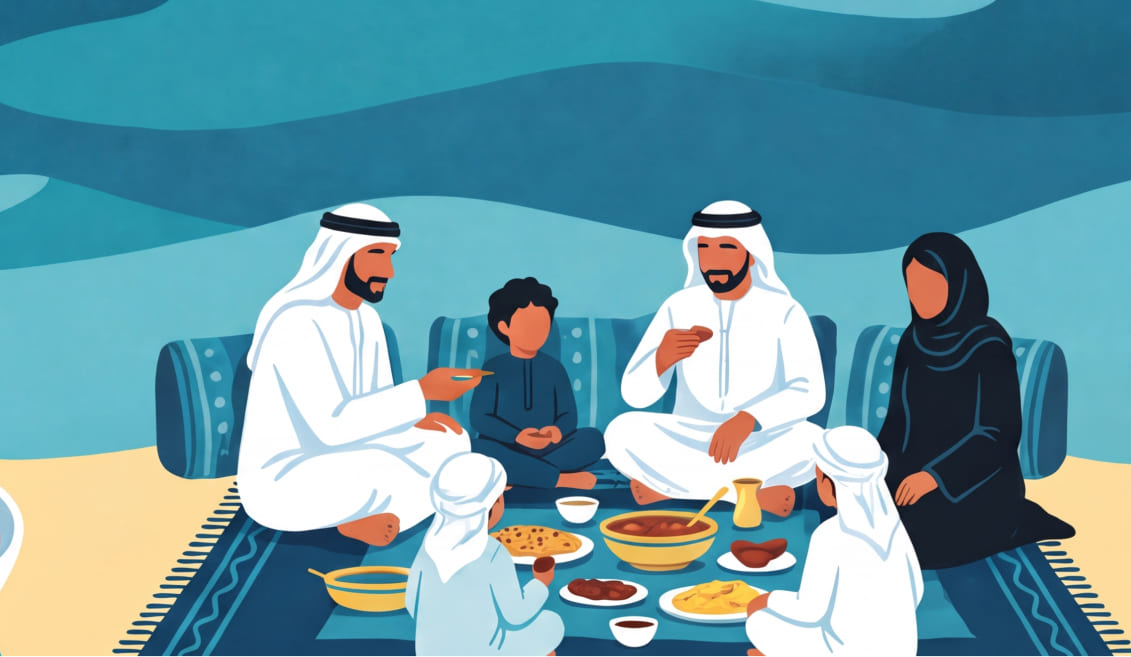
The food culture of Dubai is probably the most amazing thing about the city, since it has two different histories, which are reflected in its culinary tradition. The first one is related to the roots of Emirati cuisine – Bedouins, fishing people, and oases – based mainly on dates, camel milk, rice and fish from the Gulf. However, along with the traditional elements, there is a modern aspect of the food culture – a fusion of many cuisines from all over the world, where one may find a gourmet Michelin-star menu next to the shawarma, costing only two dirhams. The fact is that there are over 200 nationalities living in Dubai, who have introduced their own elements into the cuisine. One needs to experience both sides to comprehend the food culture of the city.
This guide provides an overview of everything one may need to know about Dubai food culture: origin of Emirati cuisine, traditional dishes to try, eating habits and culture, as well as the best places to taste authentic food in Dubai from restored cafés in Al Fahidi to fragrant lanes of the old souks.
The roots of Dubai food culture
Real Emirati food did not come from restaurants. It grew out of three ways of life that shaped this coast long before the skyscrapers appeared. The Bedouin communities of the desert lived on what was portable and long-lasting: dates, camel milk, dried meat and grains. The fishing villages along the Persian Gulf brought up hammour, safi and prawns that still define the local seafood today. And the oasis farmers grew wheat and looked after date palms, giving the cuisine its staple grains and its natural sweetness.
Then the traders arrived. Dubai has been a port for centuries, and the ships that passed through it left their flavours behind. Persian and Indian merchants brought saffron, cardamom, cinnamon and rice. The East African trade routes added slow-cooking techniques. This is the reason why Emirati cuisine tastes the way it does - aromatic and warmly spiced rather than fiery, relying on the local spice blend called bezar and on loomi (dried black lime) for that particular tangy depth. If you have ever wondered why Dubai food culture feels both deeply Arabian and quietly global at the same time, the answer lies in the sea and the trade routes that fed the city for generations.
Traditional Emirati food you should try
If you ask anyone where to find real Arabic food in Dubai, the conversation quickly turns to these dishes. This is the heart of traditional Emirati food – the plates that appear at weddings, at Eid, and around family tables during Ramadan.
Machboos (or Majboos) is the national dish of the UAE and the one to begin with. It is fragrant rice, slow-cooked in a spiced broth with chicken, lamb or seafood, and lifted with loomi for a tangy, savoury depth. If you try just one Emirati dish, let it be this one.
Harees is comfort food in its most basic form: wheat and meat, slow-cooked for hours with a pinch of salt until it turns into a smooth, porridge-like texture. It is a staple of the Ramadan iftar and of festive gatherings, and its simplicity is exactly the point of it.
Ouzi (or Lamb Ouzi) is the dish for big celebrations - Eid, weddings, large family feasts. A whole slow-roasted lamb is served over spiced rice, often with nuts scattered on top, and it is generous enough to feed a whole crowd.
Balaleet is one of the most surprising dishes of the cuisine: sweet vermicelli noodles perfumed with saffron and cardamom, and topped with a thin savoury omelette. That combination of sweet and savoury is a direct echo of the old trade routes to South Asia, and it is a traditional Emirati breakfast, especially on the morning of Eid.
Luqaimat is the dessert everyone falls in love with - small crisp dough balls, golden on the outside and soft inside, drizzled with sticky date syrup or honey. You will come across them at Ramadan tents and celebrations all over the city.
To complete the picture, there is thareed (a spiced meat-and-vegetable stew poured over thin regag bread), khameer and chebab (Emirati breads often eaten with cheese, date syrup or honey at breakfast), and madrooba, a hearty salted-fish or chicken dish cooked to a thick, mashed consistency. Together, these are the dishes that define authentic Emirati cuisine.
Dining customs and the culture of hospitality
You cannot separate Dubai food culture from the tradition of hospitality that surrounds it. In Emirati culture, feeding a guest generously is a matter of honour, and there are several customs that shape the way meals actually happen.
The ritual that most visitors meet first is gahwa and dates - Arabic coffee served in small handleless cups called finjan, poured from a long-spouted pot called a dallah, and offered together with fresh dates. The coffee is lightly roasted and spiced with cardamom, and sometimes saffron. Here is a small custom worth knowing: gently shaking your cup from side to side is the signal that you have had enough; otherwise your host will keep refilling it, because stopping would seem inhospitable.
Traditional meals are often shared from communal platters, and the right hand is used for eating, following long-standing Arab etiquette. Many gatherings take place in a majlis, a sitting area where guests are received, conversation flows freely, and food is offered without hesitation. Hospitality here is not a performance - it is a genuine value, and being invited to eat means being welcomed in.
The most important season for food is Ramadan. During the holy month, families and friends break their fast at iftar with dates and water, followed by dishes like harees, thareed and luqaimat that carry a deep meaning - nourishment, gratitude and togetherness after a day of fasting. If you happen to be in Dubai during Ramadan, an iftar is one of the most memorable ways to experience Emirati food culture at first hand.
Dubai's multicultural food scene
Here is what makes Dubai truly unique: alongside its Emirati heart, the city is one of the most diverse food destinations on the planet. With residents from more than 200 nationalities, the everyday food culture of Dubai is wonderfully global, and some of the best food in Dubai is not Emirati at all - it is the cuisine that migrant communities brought with them and made their own.
Indian and Pakistani kitchens serve some of the city's most loved meals, from biryani to fresh tandoori bread in the lanes of Meena Bazaar and Al Karama. Lebanese and Levantine places turn out mezze, grilled meats and manakish that locals eat every week. Filipino, Iranian, Egyptian, Sri Lankan and East African restaurants each have their own neighbourhoods and their own loyal crowds. And the humble shawarma - wrapped fresh at countless corner cafeterias for just a few dirhams - is arguably the true street food of Dubai.
This layering is the whole point. Dubai food culture is not simply Emirati cuisine kept under glass; it is a living, mixing, constantly evolving scene where a single street can offer Gulf seafood, South Indian dosas and a French bistro side by side. Eating your way through this diversity is one of the best things you can do in the city.
Where to eat: the best places for authentic food in Dubai
If you want to taste traditional Emirati food, the historic districts are the place to begin. Al Fahidi (Bastakiya) and Al Seef, with their restored wind-tower houses along Dubai Creek, are the atmospheric heart of the old city and home to its most authentic Emirati dining.
Arabian Tea House, tucked into a charming courtyard in Al Fahidi, has been a peaceful escape since 1997. It is one of the best places to try an Emirati breakfast - tanoor bread, balaleet, cheese and proper Arabic coffee - in a leafy, blue-and-white setting that feels a world away from the malls.
Bait Maryam brings home-style Emirati and Levantine cooking to the table, with dishes like harees, machboos and luqaimat prepared the way they would be made in a family kitchen - a genuinely warm place to eat traditional food.
For the full cultural experience, the Sheikh Mohammed Centre for Cultural Understanding (SMCCU) in Al Fahidi hosts shared traditional Emirati meals designed to introduce visitors to the local food and customs, often with the chance to ask questions under their motto, "Open Doors, Open Minds." Al Khayma Heritage Restaurant and Al Fanar, which recreates the Dubai of the 1960s, are other strong choices for classic Emirati plates.
Beyond the old town, the range is enormous. Downtown and DIFC hold celebrity-chef restaurants and Michelin-starred kitchens; the beach clubs of Jumeirah serve fresh seafood by the water; and the rooftops of Dubai Marina turn dinner into a skyline view. Whether you are after good food in Dubai on a budget or a once-in-a-trip fine-dining night, the city genuinely offers both.
Street food, souks, and markets
Some of the most memorable eating in Dubai costs the least. The old souks near Dubai Creek - especially the spice souk - fill the air with cardamom, saffron, dried limes and frankincense, and they are the best place to understand the ingredients behind Emirati cooking. Wander the lanes of Meena Bazaar for South Asian sweets and snacks, or join the queue at a neighbourhood cafeteria for a shawarma and a fresh juice.
Throughout the year, food festivals and Ramadan tents bring luqaimat, grilled meats and regional specialities out into the open air. And if you prefer casual exploring, the city's food halls gather dozens of cuisines under a single roof – an easy way to sample widely in one visit.
Tips for experiencing Dubai food culture
There are a few things worth knowing before you eat your way through the city. Emirati food is aromatic, not spicy-hot - expect warmth from cardamom, cinnamon, saffron and loomi rather than chilli heat. During Ramadan, eating and drinking in public during daylight hours is traditionally avoided out of respect, but iftar after sunset is a spectacular time to experience the local food and generosity. Accept the Arabic coffee and dates when they are offered - it is a genuine gesture of welcome - and remember the little cup-shake when you have had enough. And do not limit yourself to a single cuisine: the true flavour of Dubai is the mix.
Questions
What is the national dish of the UAE?
Machboos (also spelled majboos) is the national dish - fragrant spiced rice, slow-cooked with meat, chicken or seafood and flavoured with loomi (dried lime). It is the essential starting point for anyone exploring Emirati cuisine.
What is traditional Emirati food?
Traditional Emirati food is centred on rice, meat, seafood, dates and warm spices. The signature dishes include machboos, harees, ouzi, thareed, balaleet and the dessert luqaimat. The flavours are aromatic and moderate rather than fiery, shaped by Bedouin, Gulf-fishing and trade-route influences.
Where can I eat authentic Emirati food in Dubai?
The Al Fahidi (Bastakiya) and Al Seef historic districts are the best areas. Try Arabian Tea House and Bait Maryam for home-style dishes, Al Fanar or Al Khayma for classic Emirati plates, and the SMCCU cultural meals for the full experience with local hosts.
Is Dubai food spicy?
Not in the chilli-heat sense. Emirati cuisine is warmly spiced and aromatic, relying on cardamom, cinnamon, saffron, the bezar spice blend and dried lime. That said, the Indian and Pakistani restaurants of Dubai can serve genuinely spicy dishes if that is what you are looking for.
What is the street food of Dubai?
The shawarma is the classic - wrapped fresh, inexpensive, and found everywhere. Beyond it, the souks and South Asian neighbourhoods like Meena Bazaar offer snacks, sweets, grilled meats and fresh juices that define casual eating in the city.
What should I know about dining etiquette in Dubai?
Meals are often shared, the right hand is used for eating, and hospitality is central to everything. Accept Arabic coffee and dates when they are offered, gently shake the small cup when you have had enough, and be mindful of eating in public during daylight in Ramadan.
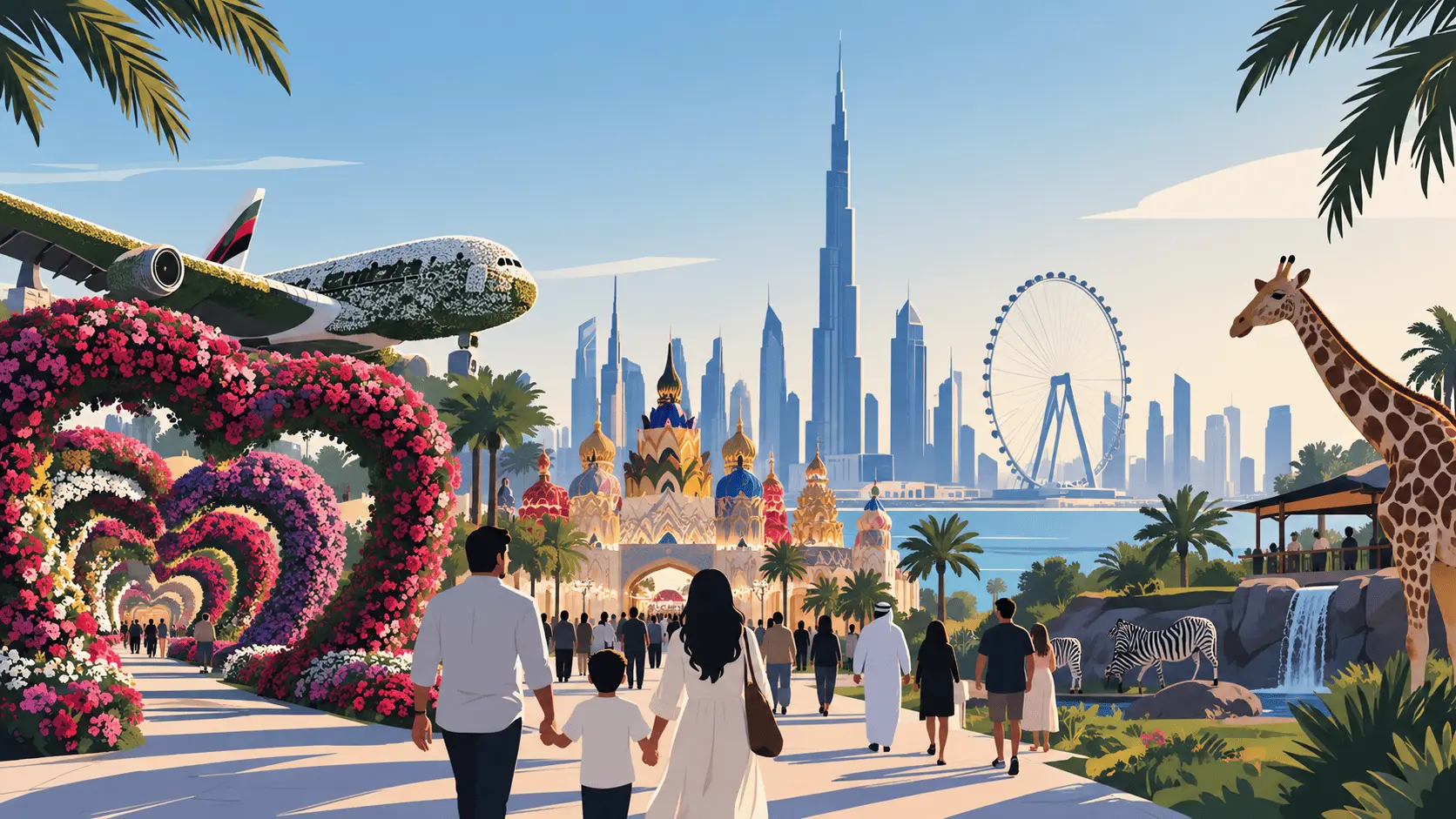
Dubai Is Coming Back Outside: When the City's Seasonal Attractions Reopen After Summer 2026
Global Village opens October 14, Dubai Safari Park opens October 12, and Miracle Garden, Garden Glow and Ripe Market follow through autumn. Here's every confirmed and expected reopening date for Dubai's 2026-27 outdoor season.

Etihad Rail Is Coming to Dubai: What Changes From September 30
On September 30, Etihad Rail's Dubai station opens at Al Yalayis, connecting the city to a national passenger railway for the first time and linking it to Abu Dhabi, Sharjah and beyond.
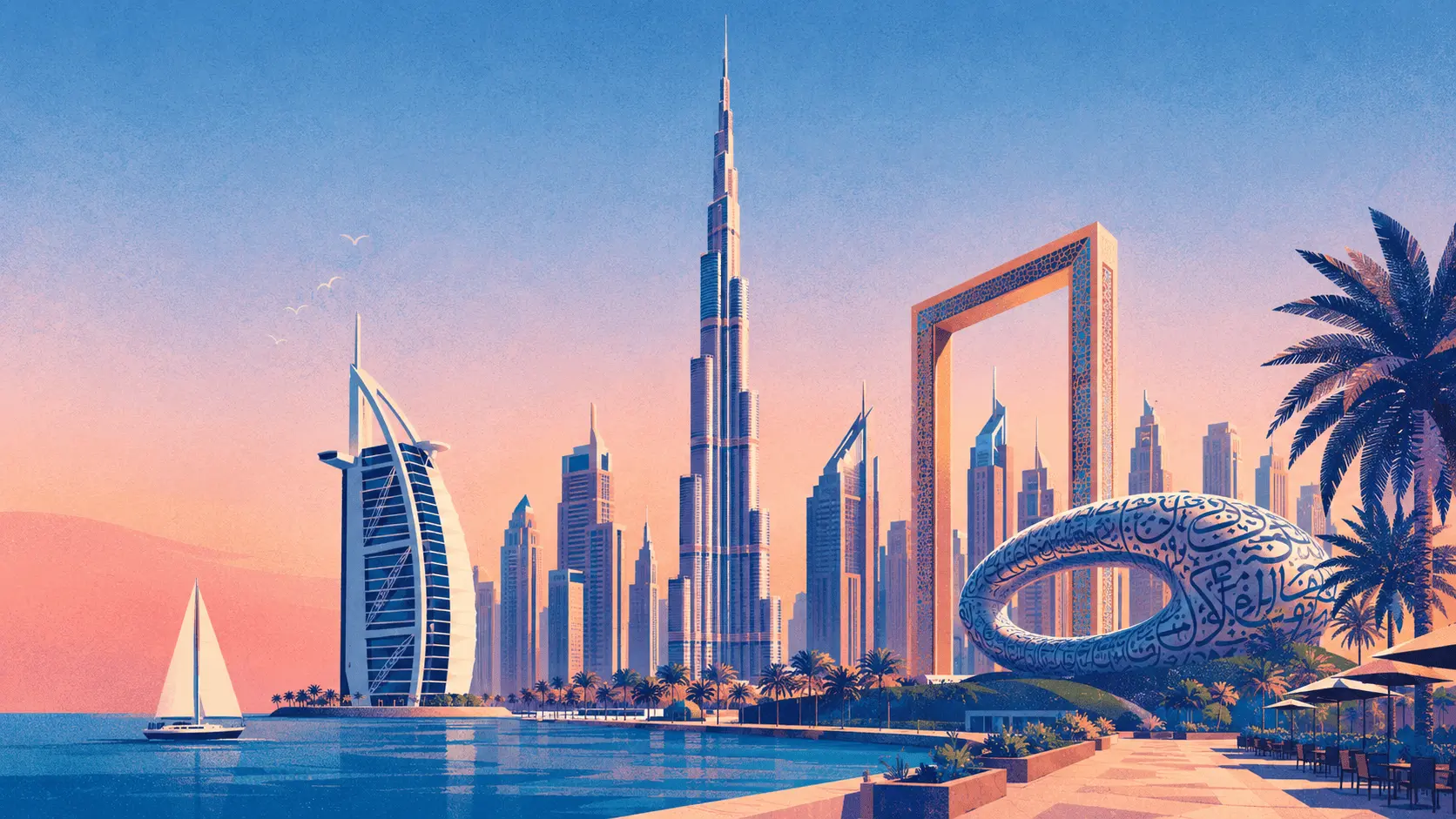
Dubai Landmarks Set for Major Reopenings as the City Enters Its New Season
Global Village and Dubai Safari Park are set to return in October, while the Museum of the Future and Burj Al Arab remain closed for major transformations.