Dubai Is Hiring Again. So Why Is Finding a Job Still So Hard?
The UAE labour market is recovering, but employers are more selective, competition remains intense, and AI is changing what it means to be employable.
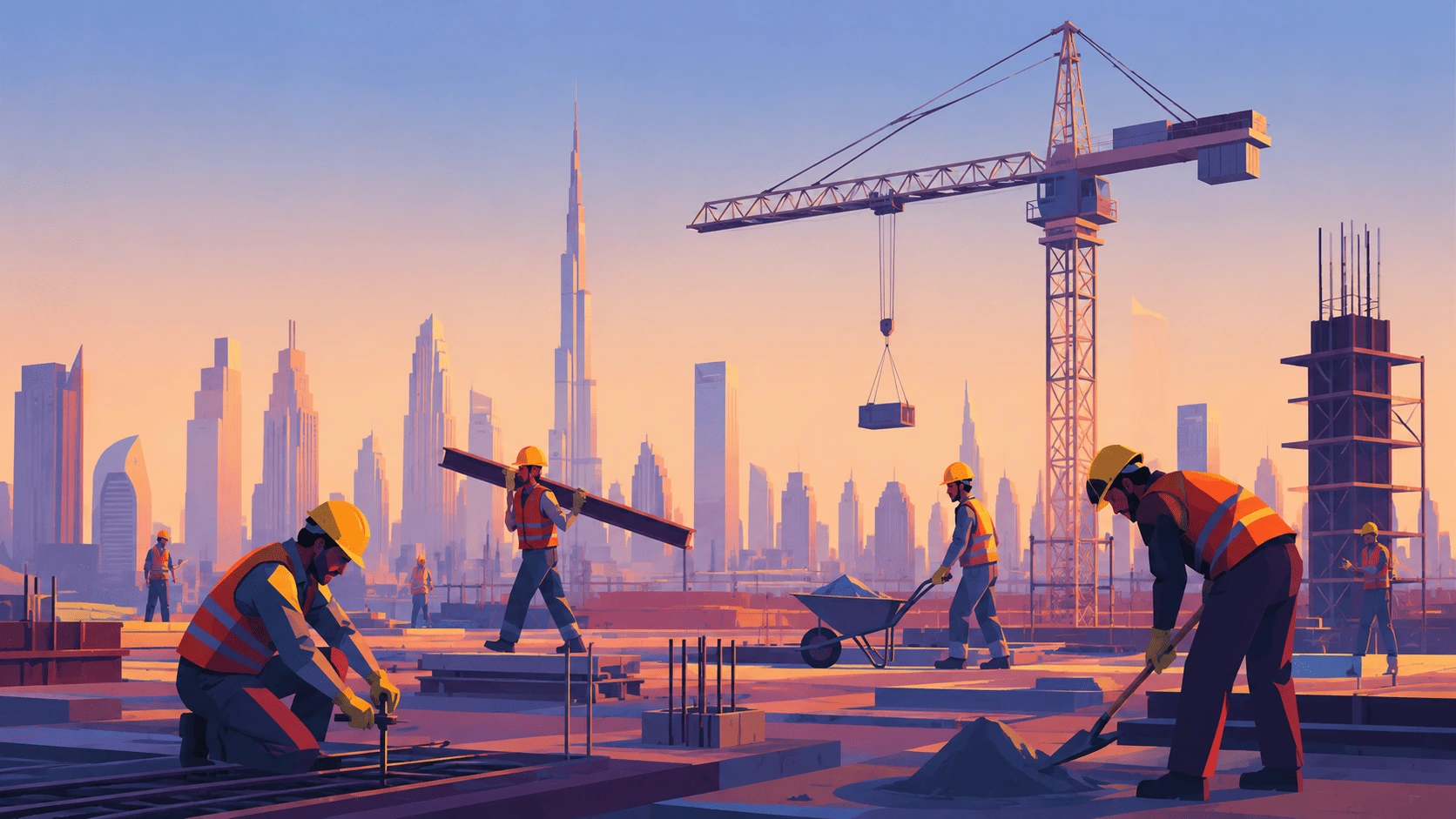
The UAE's labour market is showing signs of recovery after a difficult start to 2026. But beneath the headline numbers, employers are becoming more selective, competition remains intense, and artificial intelligence is changing what it means to be employable in Dubai.
Dubai's job market is moving again. After a difficult first half of 2026, hiring activity across the UAE has begun to recover. The country's non-oil private sector returned to stronger growth in July, employment rebounded, and new business increased. Dubai's own private-sector activity also improved.
On paper, that sounds like good news for anyone looking for work in the emirate. But speak to job seekers, and the picture can feel very different. Applications disappear into recruitment systems. Hundreds of people can compete for the same vacancy. Employers are taking longer to make decisions. Experience matters more. Specialist skills matter more. And increasingly, knowing how to use artificial intelligence is becoming part of the job itself.
So, if Dubai is hiring again, why does finding a job still feel so difficult? The answer lies somewhere between a recovering economy and a labour market that is becoming much more selective.
The numbers are moving in the right direction
The first thing to establish is that the Dubai job market is not collapsing. Quite the opposite. The UAE's seasonally adjusted S&P Global Purchasing Managers' Index rose from 50.8 in June to 52.7 in July, its strongest reading in four months. A PMI reading above 50 indicates that private-sector activity is expanding.
More importantly for workers, employment returned to growth in July after companies cut jobs sharply in June, in what was reportedly the steepest reduction in workforce numbers in nearly six years. Firms reported stronger demand as the reason for restarting recruitment.
Dubai also recorded an improvement. Its non-oil PMI rose from 50.7 in June to 51.7 in July, while new business growth strengthened. That does not mean companies have suddenly opened the floodgates to recruitment. It means the direction has changed. After a period of caution, businesses are beginning to hire again.
But hiring is not the same as easy hiring
This is where the headline figures can be misleading. Earlier in the year, employers across the UAE became more cautious as geopolitical uncertainty, weaker client activity, and rising costs affected business decisions. In June, employment across the UAE's non-oil private sector recorded one of its sharpest contractions in years.
By July, hiring had returned. But business confidence remained weak, with reports suggesting only a small share of companies surveyed expected growth over the coming year, while businesses continued to face competitive pressures and uncertainty.
That creates an unusual labour market. Companies are hiring, but they are also watching costs. They want people who can contribute quickly. They want specialised knowledge. And they have more incentive to ask whether a role can be done more efficiently with technology. For job seekers, this creates a market where having a degree and several years of experience may no longer be enough on its own.
The competition has become more visible
LinkedIn's UAE Economic Graph Report provides another part of the picture. The UAE recorded one of the world's strongest post-pandemic hiring recoveries in 2025, and early data from mid-2026 showed hiring and international talent flows beginning to recover after volatility earlier in the year.
That sounds encouraging. But LinkedIn's own labour-market data has also highlighted just how crowded the candidate pool has become, with a majority of UAE professionals citing an overcrowded field of applicants as their single biggest challenge in the job search.
This helps explain the disconnect between economic recovery and the lived experience of job seekers. The market can be improving while the competition for individual vacancies remains extremely high. For someone applying for 50 jobs and hearing nothing back, a recovery in the PMI does not necessarily feel like a recovery.
Dubai's employers are looking for different things
The traditional Dubai job search often revolved around qualifications, years of experience, and professional connections. Those still matter. But recruiters are increasingly talking about something else: specialisation.
Recruiters quoted by The National have said demand remains strong for professionals in financial services, technology, healthcare, energy, cybersecurity, data, and AI, as well as engineers and sales specialists. Employers are particularly interested in people with hard-to-find technical expertise, commercial impact, regulatory knowledge, and strong stakeholder-management skills.
That distinction matters. The market is not simply asking "do you have five years of experience?" It is increasingly asking "what can you do that is difficult to replace?"
The rise of the specialist
This could be one of the defining characteristics of Dubai's employment market in 2026. A generalist may be able to perform several different tasks reasonably well. A specialist can solve a specific problem that a company urgently needs solved. That could mean cybersecurity, artificial intelligence, data analysis, cloud infrastructure, financial technology, regulatory compliance, engineering, healthcare, high-value sales, or digital transformation.
The shift is not necessarily eliminating generalist careers. Instead, it is changing the balance of power. When companies are cautious about hiring, they have more reason to prioritise candidates who can demonstrate a measurable contribution from day one.
Then there is AI
Artificial intelligence may be the biggest structural change taking place in Dubai's labour market. According to PwC's 2026 Global AI Jobs Barometer, the share of UAE job postings requiring AI skills increased from about 1 percent in 2021 to 3.2 percent in 2025, lifting the country from 21st to 13th place globally in AI hiring. In absolute terms, that represented a jump from roughly 4,600 job advertisements requiring AI capabilities in 2021 to around 12,200 by 2025.
But the important story is not simply the number of AI engineers being hired. It is the fact that AI skills are increasingly appearing inside ordinary jobs: a marketer who knows how to use generative AI, a financial analyst who can automate analysis, a designer who understands AI-assisted production, a recruiter who knows how to work with AI tools, an operations manager who can redesign a workflow around automation. The question is becoming less about whether someone works in AI and more about whether they can work effectively with it.
AI is not simply replacing people
The popular version of the AI story is straightforward: AI will take people's jobs. The labour-market data is more complicated. PwC's global research, based on more than one billion job advertisements, found that companies most exposed to AI were actually experiencing faster headcount and wage growth than companies less exposed to AI. Jobs requiring specific AI skills were also growing significantly faster than the overall jobs market.
In the UAE, that growth appears particularly focused on using AI inside existing businesses rather than building it. Analysis of the PwC data suggests UAE demand is increasingly weighted towards "AI user" roles rather than purely "AI developer" positions, with AI user jobs growing strongly as companies integrate AI into everyday operations.
That distinction could become extremely important for Dubai's workforce. The future job market may not be divided between people who work with AI and people who do not. It may be divided between people who know how to use AI productively and people whose work remains entirely dependent on processes that technology can perform faster.
The entry-level problem
There is another uncomfortable side to this transformation. AI can make experienced professionals more productive, but it can also change how companies think about junior employees. Traditionally, entry-level workers learned through routine tasks before gradually taking on more complex responsibilities. AI can automate some of those routine tasks.
PwC's global research found that AI-exposed junior roles are increasingly demanding skills traditionally associated with more senior positions, including judgement and leadership, with skills required in AI-exposed jobs changing far faster than in other roles. That creates a difficult question for graduates: how do you get experience when employers increasingly expect you to arrive with it? For young professionals entering Dubai's market, a university degree may therefore be only the starting point. Projects, portfolios, internships, certifications, measurable results, and practical AI literacy can become much more important.
Which sectors are still hiring
There is no single Dubai job market. There are several markets operating simultaneously. Financial services remain one of the strongest areas, particularly banking, fintech, private banking, and wealth management. Technology, healthcare, energy, construction, and infrastructure also continue to show demand. LinkedIn's UAE data also points to strong hiring in real estate, education, construction, healthcare, administrative services, and transport and logistics compared with pre-pandemic levels.
That matters because Dubai's economy is much broader than its technology sector. The city continues to create employment through property development, infrastructure, logistics, tourism, finance, healthcare, and professional services. The opportunities have not disappeared. They have become more unevenly distributed.
And what about salaries
A stronger hiring market does not automatically mean dramatically higher salaries. Employers remain cost-conscious, particularly after the economic uncertainty seen earlier in the year. This makes the salary conversation increasingly dependent on the candidate. Someone with a common skill set may find that employers have plenty of alternatives. Someone with scarce technical expertise can have much greater negotiating power.
AI provides a particularly striking example. PwC's research has found that AI skills command a substantial wage premium in the UAE, with some professionals holding AI capabilities reportedly commanding significantly higher earnings than peers without them. The lesson is not that learning one AI tool will suddenly double someone's salary. It is that skills that measurably increase productivity are becoming economically valuable in a way generic experience alone no longer guarantees.
Dubai is still attracting global talent
There is another reason the market remains highly competitive. Dubai is not recruiting only from Dubai. It is competing globally for talent. The UAE's recent LinkedIn data points to improving international talent inflows alongside the recovery in hiring activity.
For employers, that creates access to a huge international talent pool. For workers, it means the competition does not necessarily stop at the people living in the same neighbourhood. A company in Dubai can search for candidates in London, Mumbai, Singapore, Riyadh, Manila, or anywhere else with the skills it needs. That is one reason professional visibility matters more than it once did. A LinkedIn profile, portfolio, personal website, professional network, and demonstrated work can all become part of the hiring process before a CV is even opened.
So, is it hard to get a job in Dubai in 2026
Yes. But not necessarily because Dubai has stopped hiring. The harder reality is that the market is becoming more selective while remaining active. There are jobs. There is investment. There are growing companies. There is demand for talent. But employers increasingly have a reason to wait for the right person rather than hire the first available candidate.
That changes the strategy for job seekers. Sending 100 identical CVs may be less effective than applying to 20 carefully selected positions. Listing 20 skills may be less useful than demonstrating three skills exceptionally well. Saying "I know AI" is less convincing than showing how you used it to reduce costs, increase output, or solve a real business problem. And having five years of experience may matter less than being able to demonstrate what those five years actually produced.
The new rules of finding work in Dubai
The Dubai job market of 2026 increasingly rewards people who can demonstrate value rather than simply describe themselves. Build a specialisation, and know precisely what problem you solve and why an employer should care. Learn to work with AI, you do not necessarily need to become an AI engineer; understanding how AI can improve your own profession may be enough to create an advantage. Show your work, since a portfolio, case study, project, or measurable result can communicate more than a list of responsibilities on a CV. Build relationships before you need them, recruiters continue to emphasise networking and professional reputation as an underrated part of the job search. And be specific about your value: "graphic designer" is a job title, "designer who increased campaign conversion by 28 percent" is a business proposition. That difference matters.
The real story behind Dubai's job recovery
Dubai's employment market is not experiencing a simple boom or bust. It is changing. The first half of 2026 showed how quickly geopolitical uncertainty and weaker demand can affect hiring. July brought evidence of a rebound, with private-sector activity and employment improving. But the recovery is happening alongside another transformation: companies are becoming more selective, specialist skills are gaining value, AI is moving into ordinary jobs, international competition is increasing, and the traditional path from education to entry-level work is being challenged by technology.
That is why the most accurate description of Dubai's job market in 2026 may not be "good" or "bad." It is more competitive. For people with the right skills, that can be an opportunity. For people relying on yesterday's definition of employability, it can be a warning.
Questions
Is Dubai's job market recovering in 2026?
Yes. The UAE's seasonally adjusted PMI rose from 50.8 in June to 52.7 in July 2026, its strongest reading in four months, with employment returning to growth after a sharp contraction in June. Dubai's own non-oil PMI also improved over the same period.
Why is it still hard to find a job in Dubai despite the recovery?
The recovery is real, but employers have become significantly more selective, weighing costs carefully, prioritising specialist skills, and taking longer to make hiring decisions. Competition for individual vacancies also remains intense, with many UAE professionals citing an overcrowded candidate pool as their biggest challenge.
What skills are most in demand in Dubai right now?
Recruiters report strong demand in financial services, technology, healthcare, energy, cybersecurity, data, and AI, along with engineering and high-value sales roles. Employers are increasingly prioritising hard-to-find technical expertise and demonstrable commercial impact over general experience alone.
Is AI replacing jobs in Dubai?
Not straightforwardly. PwC's 2026 Global AI Jobs Barometer found that companies more exposed to AI actually saw faster headcount and wage growth than less-exposed companies. Growth in the UAE is concentrated in "AI user" roles across many professions, rather than solely AI development jobs.
How can job seekers improve their chances in Dubai's 2026 market?
Build a clear specialisation, learn to use AI within your own field even without becoming a technical AI expert, show measurable results through a portfolio or case studies rather than a list of responsibilities, and invest in professional visibility and networking rather than relying on volume applications alone.

Dubai Is Coming Back Outside: When the City's Seasonal Attractions Reopen After Summer 2026
Global Village opens October 14, Dubai Safari Park opens October 12, and Miracle Garden, Garden Glow and Ripe Market follow through autumn. Here's every confirmed and expected reopening date for Dubai's 2026-27 outdoor season.
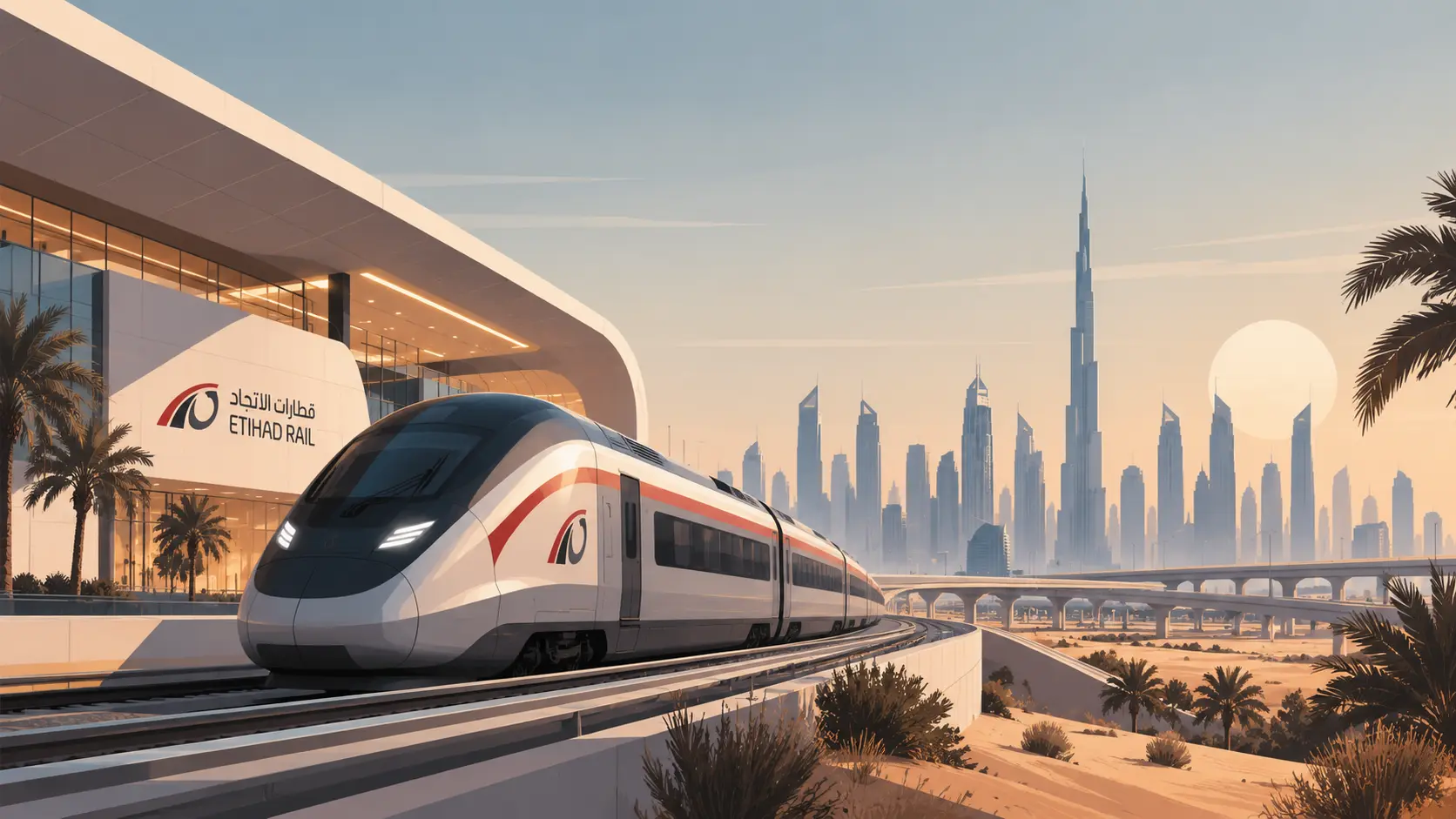
Etihad Rail Is Coming to Dubai: What Changes From September 30
On September 30, Etihad Rail's Dubai station opens at Al Yalayis, connecting the city to a national passenger railway for the first time and linking it to Abu Dhabi, Sharjah and beyond.

Dubai Landmarks Set for Major Reopenings as the City Enters Its New Season
Global Village and Dubai Safari Park are set to return in October, while the Museum of the Future and Burj Al Arab remain closed for major transformations.