Dubai's Iconic Toyota Building to Be Demolished in 2027
The Toyota Building on Sheikh Zayed Road is set for demolition in 2027 after more than 50 years. Here's the story behind Dubai's most nostalgic landmark.
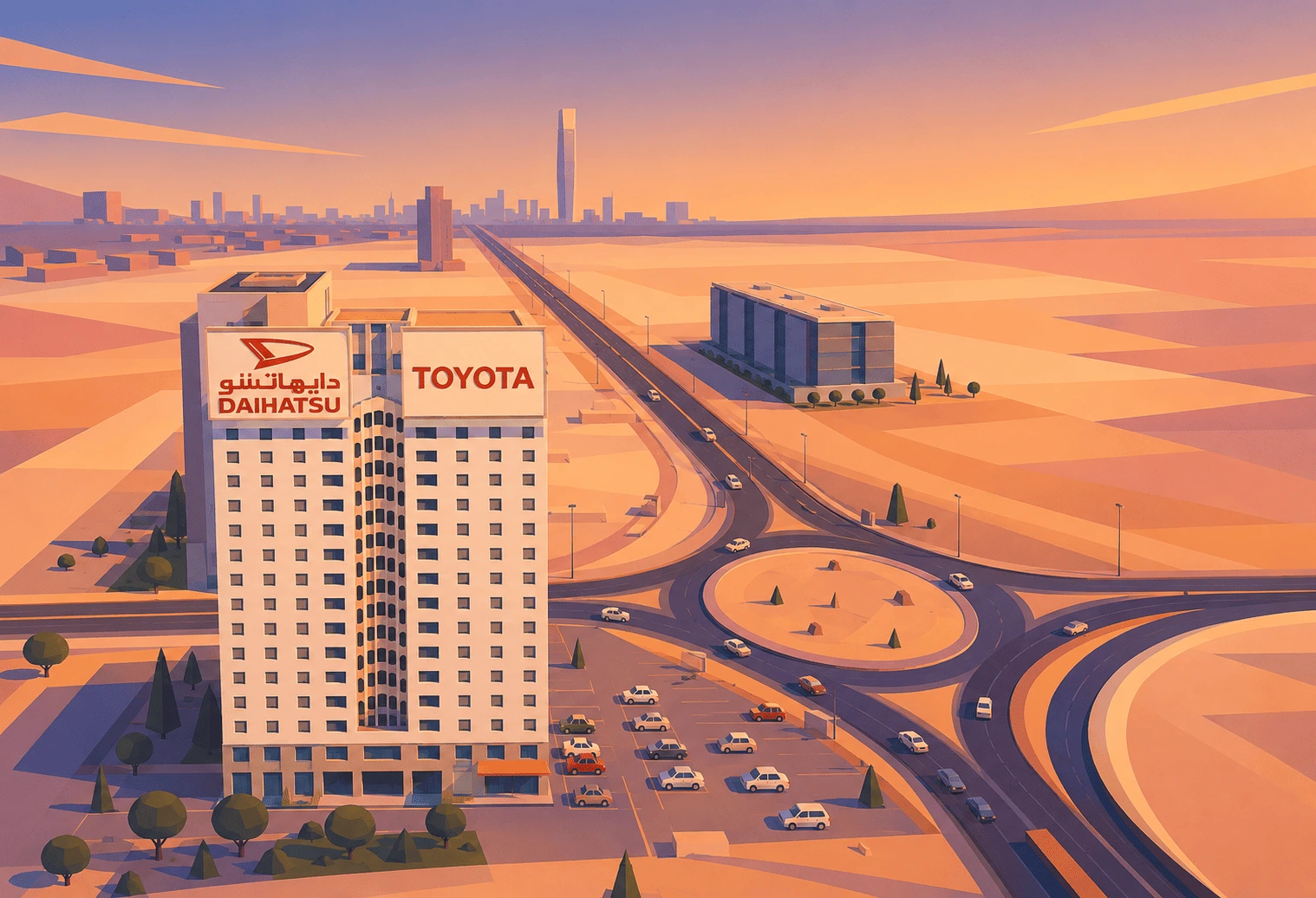
Dubai is preparing to lose one of the most recognisable landmarks from its early skyline. The Toyota Building on Sheikh Zayed Road, officially the Nasser Rashid Lootah Building, is scheduled for demolition in 2027 after more than five decades overlooking one of the city's busiest roads. The 15-storey residential tower has stood through Dubai's transformation from a low-rise coastal city into a global skyline dominated by skyscrapers, and for generations of residents it was never simply another apartment building. It was the Toyota Building, a landmark people used to navigate the city long before GPS did it for them. Now, its final chapter is approaching.
A building that predates modern Dubai's skyline
The Nasser Rashid Lootah Building was completed in 1974, just three years after the formation of the UAE. At the time, the area around what was then known as Defence Roundabout looked nothing like the Dubai of today, the building was reportedly one of only three structures in the area, surrounded mostly by sand, low-rise homes, and open land. Today that same stretch sits inside Sheikh Zayed Road's dense, multilayered interchange network, hemmed in by some of the city's most recognisable skyscrapers.
Academic research into Dubai's modern architectural heritage describes the building as one of the city's earliest high-rise residential structures and a meaningful part of its collective memory. Standing roughly 65 metres tall, it was built in the functionalist style common in Dubai during the early 1970s, with a concrete exterior and relatively small windows designed with the local climate in mind rather than any particular aesthetic ambition.
Why everyone calls it the Toyota Building
The building was never owned by Toyota and was never built as a Toyota facility. Its nickname came entirely from an enormous illuminated Toyota sign installed on the roof, which became so recognisable that residents stopped using the building's official name altogether, referring to it simply as "the Toyota Building" when giving directions.
The sign first went up in 1981, and it defined the tower for close to four decades before the advertising contract lapsed and the sign came down in 2018. But the story does not end there, and this is where it gets interesting: in June 2022, Toyota UAE reinstalled the sign, restoring an English-language version facing traffic heading north toward Sharjah and adding a new Arabic version on the opposite face of the building. Toyota said at the time that the sign was brought back "by popular demand," acknowledging just how deeply it had become woven into the identity of Sheikh Zayed Road. Which means the sign is not some relic that quietly disappeared years ago, it is lit up on the building right now, as the tower it named enters its final months.
From open sand to a city of skyscrapers
The story of the Toyota Building is, in a real sense, the story of Dubai itself. When it was completed in 1974, the surrounding landscape bore almost no resemblance to today's Sheikh Zayed Road. Over the following five decades, the city expanded around it, roads widened, interchanges replaced roundabouts, residential and commercial towers filled the horizon, and eventually Downtown Dubai and the Burj Khalifa rose nearby, forming one of the most recognisable skylines in the world.
Through all of it, the Toyota Building remained standing, largely unchanged, while almost everything around it was demolished or rebuilt. Architectural researchers have generally described it as a large, functional concrete block rather than an architecturally spectacular structure, its significance was never really about design. It was about memory, visibility, and continuity, the rare fixed point in a city defined by constant transformation.
Why is the Toyota Building being demolished
The immediate cause is the building's condition and the practical difficulties of keeping it in use. Recent reporting indicates Dubai Municipality did not approve further maintenance work on the property, which led directly to the decision to evacuate the building ahead of demolition. The situation was compounded by overcrowding and illegally partitioned apartments, a representative of the Nasser Rashid Lootah Group told Khaleej Times that some units had been divided into multiple rooms, with certain apartments reportedly housing as many as 15 people. Authorities instructed management to resolve the overcrowding, which triggered a large-scale evacuation.
That distinction matters. This is not simply a redevelopment decision made for commercial reasons, the building's structural condition, maintenance restrictions, and overcrowding issues are the factors reporting has pointed to as driving both the evacuation and the eventual demolition.
The building is almost empty
The evacuation accelerated sharply through August 2026. Earlier reports put the figure at around 70 percent of tenants moved out, with management working to relocate those who remained. By late August, more recent reporting put the number far higher, with approximately 95 percent of tenants gone and only a handful of apartments still occupied. These figures likely reflect different stages of a fast-moving evacuation rather than conflicting accounts, the situation has been changing by the day. Dubai Municipality is also reportedly disconnecting electricity and water in phases as the process continues.
For a building that stood occupied for more than fifty years, watching residents carry their belongings out of the tower over the course of a few weeks has made the coming demolition feel far more immediate than a distant 2027 date might otherwise suggest.
Tenants can stay until the end of 2026
According to the building's management, tenants with valid rental contracts have been permitted to remain until December 2026, even as the tower is progressively emptied around them. The demolition itself is planned for 2027, though an exact date has not yet been publicly confirmed. That leaves the Toyota Building with a defined but still uncertain window, its final months as an occupied part of Dubai's urban landscape.
The end of a familiar landmark
For many residents and former tenants, this is about more than a single building coming down, it is about losing a reference point that has existed for most of modern Dubai's history. People who lived in the city decades ago remember the Toyota sign glowing above the tower back when Sheikh Zayed Road looked nothing like it does now, and online reaction to the demolition news has carried a strong current of nostalgia, with many residents describing the building as a rare, tangible reminder of the city's past and expressing disappointment that it will not be preserved in some form.
What makes that reaction notable is that almost nobody is arguing the building is beautiful in any conventional sense. Its value has always been emotional rather than architectural. It is familiar, and in a city that rebuilds itself as fast as Dubai does, familiarity of that duration has become its own kind of rare.
Dubai's modern heritage problem
The Toyota Building also points to a larger question about what happens to older buildings in a city defined by constant reinvention. Dubai's modern history has unfolded at extraordinary speed, and structures that once represented the city's future can look outdated within a few decades as newer development rises around them. Academic research on Dubai's modern heritage specifically cites the Toyota Building as an example of this exact challenge, arguing that buildings from the 1960s and 1970s can carry real historical and cultural significance even without formal heritage protection.
That makes the Toyota Building an unusual case. It is not a traditional heritage monument, but it documents a specific, disappearing moment in Dubai's history, what the city looked like before the skyscrapers arrived, and there is currently no formal mechanism protecting buildings like it from exactly this outcome.
What comes next
Detailed public plans for the site's future have not yet been released. What is confirmed is that the existing tower is expected to disappear in 2027, on a plot sitting along one of Dubai's most valuable and heavily developed corridors. Once it is gone, the skyline will have one less physical connection to the city's earliest years as a modern state. A new development will very likely eventually take its place, but whatever rises there will not carry five decades of accumulated memory with it. A modern tower can recreate the location. It cannot recreate the history.
Questions
Why is Dubai's Toyota Building being demolished?
Reporting points to the building's structural condition and Dubai Municipality declining to approve further maintenance, compounded by overcrowding from illegally partitioned apartments, some reportedly housing up to 15 people. This led to a mandated evacuation and the subsequent demolition decision, rather than a straightforward commercial redevelopment.
Was the Toyota Building ever actually owned by Toyota?
No. The building, officially the Nasser Rashid Lootah Building, was never owned or built by Toyota. Its nickname came from a large illuminated Toyota advertising sign installed on the roof in 1981, which became so well known that it replaced the building's official name in everyday use.
Is the Toyota sign still on the building?
Yes, as of this writing. The original sign came down in 2018 when the advertising contract ended, but Toyota UAE reinstalled it in June 2022, adding an English-facing sign toward Sharjah-bound traffic and a new Arabic sign on the opposite side, restoring it "by popular demand."
When will the Toyota Building be demolished?
Demolition is planned for 2027, though an exact date has not yet been publicly confirmed. Tenants with valid rental contracts have been permitted to stay until the end of December 2026 while the building continues to be emptied.
How many tenants have already left the Toyota Building?
Evacuation accelerated significantly through August 2026. Earlier reports cited around 70 percent of tenants relocated, while more recent reporting put the figure at approximately 95 percent, with only a handful of apartments still occupied.
Why Saudi Arabia Is Being Pulled Back Into War With the Houthis
Saudi Arabia is once again facing Houthi missiles and drones, but this time the fighting is unfolding inside a much larger regional war, one that has already closed the Strait of Hormuz and now threatens the Red Sea's Bab al-Mandeb chokepoint too.

Dolly Parton, Country Music Icon and Philanthropist, Dies at 80
The legendary singer, songwriter, actress and humanitarian leaves behind a six-decade legacy that reached far beyond country music.
Abu Dhabi Confirmed to Host the 2026 F1 Season Finale
F1's chief executive has ended weeks of uncertainty, confirming the season finale stays at Yas Marina Circuit this December.